Hollywood's New Farm System Isn't Film School. It's the Internet.
Hollywood’s New Farm System Isn’t Film School. It’s the Internet.
What the rise of creator-driven films like Backrooms and Obsession signals for actors, filmmakers, and performers in 2026.
For decades, the route into Hollywood read like a checklist. Train. Shoot headshots. Sign with an agency. Audition. Network. Wait for someone to crack a door.
None of that has vanished. Actors still need craft, filmmakers still need chops, and relationships still move careers. But the door is no longer the only way in — and in a growing number of cases, it’s no longer even the first one.
The industry’s most talked-about projects are increasingly arriving from outside the traditional pipeline: YouTube channels, creator communities, podcast feeds, and audiences assembled one follower at a time. Consider the evidence. Backrooms, directed by twenty-year-old YouTube animator Kane Parsons, opened to the biggest debut in A24’s history. Obsession, from twenty-six-year-old Curry Barker, was picked up by Focus Features out of a festival premiere and went on to gross north of $140 million worldwide. Both filmmakers built their audiences one upload at a time, long before a studio ever called.
The conversation around those films feels like more than enthusiasm for two movies. It reads like a structural shift — one in which creators become filmmakers, filmmakers become brands, and audiences find talent long before a studio does. For performers, that should be encouraging. Because for the first time in a long time, visibility isn’t controlled exclusively by gatekeepers.
The Audience Comes First
The old creative career ran on a simple, nerve-wracking formula: make the work, then hope someone notices.
The creator economy has quietly inverted it. Build the audience first. Make the work second. Then bring the audience with you.
That inversion is exactly why studios, streamers, and media companies are watching creators so closely. The audience already exists. The proof of concept already exists. The demand is measurable in a way a pitch deck never could be. A filmmaker with a million subscribers isn’t selling an idea — they’re delivering a built-in marketing channel and years of demonstrated engagement.
It’s no accident that companies like Netflix are leaning into creator-driven formats, from video podcasts to creator-led programming. The wall between traditional entertainment and creator media is getting harder to see by the month.
The internet isn’t replacing Hollywood. It’s becoming one of Hollywood’s most reliable talent scouts.
What This Means for Actors
The old model ran on waiting. Waiting for auditions, for callbacks, for a greenlight, for permission.
Today’s performers have another option: they can create. Some are producing short films. Others are building followings through sketch comedy, podcasts, newsletters, or a steady drip of social content. Many are simply collaborating with filmmaker friends and quietly assembling a body of work outside the traditional system.
None of this replaces acting — it amplifies it. A casting director might still discover your self-tape. But they might also discover your short film, your podcast, or the audience you’ve spent three years building. The path isn’t necessarily shorter. It’s wider.
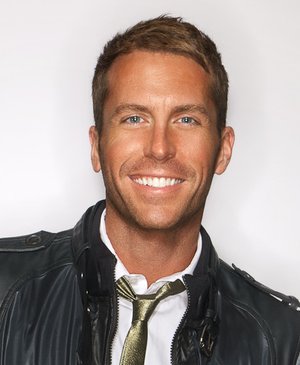
Your Headshot Isn’t Just a Casting Tool Anymore
That shift has quietly redefined the headshot.
For years, the headshot lived inside a closed industry ecosystem: casting platforms, agency submissions, audition portals. Now it lives everywhere — your website, your Instagram, your podcast artwork, your YouTube banner, your LinkedIn, your press kit, your IMDb page.
In many cases, your headshot is the first thing someone encounters before they ever watch your reel, hear your voice, or read a page of your script. It isn’t a casting photo anymore. It’s the front door to your public identity.
That’s why more actors are thinking less about getting headshots and more about building a visual brand that travels. The image that satisfies a casting director may also have to carry a podcast cover, a festival bio, a production company’s site, and a social profile — often all in the same week. The lines are blurring, and the photograph that anchors all of it has to do more work than it used to.
The Rise of the Multi-Hyphenate
Maybe the most exciting development is that creative careers are getting harder to label.
Actor. Writer. Director. Creator. Podcaster. Producer. Filmmaker. Many of the most interesting people working today are some restless combination of all of them. The performer launching a comedy channel this year may be directing a feature next. The filmmaker posting experiments to YouTube today may be premiering at a festival in eighteen months. The podcaster interviewing creatives now may be running a writers’ room before the decade is out.
Nobody knows where the next breakout voice will come from. Increasingly, that uncertainty is the point.
A More Optimistic Cut
It’s easy to fixate on what feels precarious about the business right now — the aftershocks of the strikes, the anxiety around AI, shrinking budgets, relentless consolidation. All of it is real.
But the success of creator-driven projects points somewhere more hopeful: great work can now come from anywhere. The next major filmmaker might be editing in a bedroom tonight. The next studio deal might begin as a YouTube channel. The next breakout actor might build an audience through a short film or a podcast long before a single agent calls.
Talent still matters. Craft still matters. Storytelling still matters most of all. What’s changed is that the people who have them finally have more ways than ever to put them in front of an audience. And for the actors and filmmakers willing to create while they wait, that may be the most exciting opening of all.
Sources & Further Reading
- Variety — “From ‘Backrooms’ to ‘Obsession’: Why YouTubers Are Turning Hollywood Upside Down.” variety.com
- Rolling Stone — David Fear, “Did ‘Backrooms’ and ‘Obsession’ Really Kick Off a Gen-Z Horror Wave?” rollingstone.com
- Northeastern Global News — “YouTubers Are Making Movies. Is This the Future of Hollywood?” news.northeastern.edu
- The New York Times — “The Lessons of ‘Backrooms’ and ‘Obsession.’” nytimes.com
- Associated Press — “YouTube Filmmakers and the Rise of the Digital Creator.” apnews.com
Putting your next set of materials together? Start with actor headshot sessions, explore the Men’s and Women’s galleries, and keep the Working Actor’s Field Guide nearby. Your browser may finally have a useful reason for all those tabs.