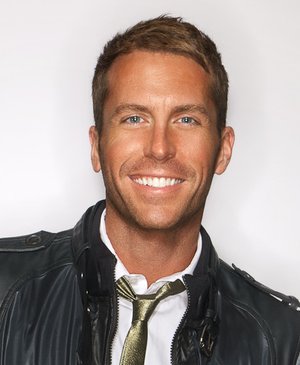
Corporate Headshot Day: The Complete Prep Guide
You've Got Five Minutes. Let's Not Waste Them.
A no-stylist, no-panic guide to showing up camera-ready when the whole office is getting photographed on the same very tightly scheduled day.
Nobody wakes up excited for corporate headshot day. It usually lands on the calendar wedged between two meetings, and by the time your five-minute slot arrives, you've had approximately one (1) chance to think about your hair since 8 a.m. Good news: you don't need a personal stylist, a glam squad, or a weekend of "researching" your best angle in the bathroom mirror. You need about ten minutes of prep and this guide. That's it.
When a whole company gets photographed in one day, everyone gets a tight window — five or ten minutes, in and out. That's genuinely enough time to get great images. It just works a lot better when you show up ready instead of using your slot to argue with a tie.
§ 01 — WardrobeFit Beats Fashion, Every Time
Nobody's judging your brand, your price tag, or how "on-trend" your blazer is. The camera cares about one thing: fit. Clothes that sit clean through the shoulders and neckline without bunching, pulling, or ballooning out around the torso. Too baggy and you lose your shape in a close crop. Too tight and you get stress-wrinkles in all the wrong places — plus you'll look like you're counting down the seconds until you can loosen your collar (you will be).
Quick gut check before the big day: put the outfit on and actually sit down in it. A blazer that looks flawless on a hanger can develop opinions of its own the second real shoulders show up.
§ 02 — ColorGo Deeper, Not Louder
Rich, medium-to-deep tones are your best friend in a headshot — they create separation between your face, your clothes, and whatever's behind you. Think:
This isn't a mandate to dress like the lead in a moody Scandinavian crime drama. Color is welcome — just steer clear of anything that blends into your skin tone or the wall behind you. If you're going shirt-only, no jacket, lean darker. It'll frame your face and keep you from vanishing into the background.
§ 03 — LayersThe Jacket Is Doing More Than You Think
A blazer, cardigan, or structured overshirt instantly adds shape and contrast to your portrait. Pair a darker outer layer with a lighter shirt underneath and let the jacket do the heavy lifting:
Navy jacket + light blue or white shirt · Charcoal jacket + soft gray or cream top · Black jacket + muted blue, green, or neutral shirt
One rule: make sure it fits through the shoulders and hangs naturally when open. If buttoning it makes it pull, just leave it open for the photo. Nobody will know.
§ 04 — BackgroundsKnow What You're Standing In Front Of
Ask whoever's organizing your shoot what background you'll be shot on — gray, white, or your actual office — and dress accordingly.
Deep blues, greens, burgundy, rust, black, and rich neutrals all pop nicely. Avoid a shirt that's nearly the same gray as the backdrop — that's how floating heads happen.
Medium and deep colors give the strongest separation. A plain white shirt can work, but usually needs a darker jacket over it to avoid disappearing.
Windows, hallways, conference rooms — busier backgrounds. Keep it simple: solid colors and clean layers so you stay the focus, not your outfit.
§ 05 — Patterns & LogosSolid Wins the Company Headshot Day
Tight checks, skinny stripes, and busy little repeating prints can shimmer and distort on camera — an effect no one is going for. Bigger, subtler patterns can survive, but on a group headshot day, solid colors are the safe, reliable choice. And unless it's an intentionally branded shoot, skip the logos and slogans. Your headshot should say who you are, not which conference gave away your favorite quarter-zip.
§ 06 — Collars, Ties & NecklinesWhatever You'd Actually Wear to Work
Open collar, buttoned-up, tie — none of it is objectively "more professional." Wear what matches your role and your comfort level. If you're going with a tie, keep the pattern simple, center that knot, and make sure the collar lies flat. For collarless tops, keep the neckline clean and give it a chest-up mirror check first — necklines have a way of looking lower once the photo gets cropped in.
§ 07 — MakeupTurn the Dial Up, Not Into a New Look
Studio lighting has a way of softening makeup right off your face, so if you normally wear it, go slightly more defined than your usual day-at-the-office look. Not a full glam transformation — just enough structure to survive the lights. That means a bit more definition on brows, a touch more color on cheeks and lips, and light powder anywhere that tends to get shiny.
If there's no makeup artist on-site, arrive fully done and bring powder and lip color for a 30-second touch-up before your slot. And whatever you do — do not debut a brand-new product the morning of the shoot. Headshot day is not the time to discover your new foundation oxidizes orange under hot lights.
§ 08 — GroomingSleep, Water, Your Normal Routine
Get a decent night's sleep, drink some water, and stick to the skincare you already know works. This is not the moment to try a new retinol. A quick pre-shoot pass:
- Check for lint, pet hair, and deodorant marks
- Clean your glasses
- Empty your pockets (that phone-shaped lump is not a good look)
- Check your teeth after coffee or lunch
- Bring a comb if your hair tends to move
- Blotting paper or oil-control powder if you run shiny
Trim or shave the way you normally do. Don't reinvent yourself for the camera — the point is a portrait that still looks like the person your coworkers see Monday morning.
§ 09 — Glasses, Jewelry & ExtrasKeep It You, Keep It Simple
Wearing glasses day-to-day? Wear them for the photo. Clean the lenses well, and if you want a few frames with and without, bring the case. Coming in from outside with transition lenses? Give them a few minutes to clear before your slot.
For jewelry, smaller and simpler photographs cleanest — statement pieces are fine if they're truly you, but remember most headshots end up pretty small on a website or LinkedIn grid. Reflective jewelry and smartwatches don't need to come off, just know they can occasionally catch the light.
§ 10 — The ScheduleArrive Early, Not Perfect
When everyone in the building is booked back-to-back in five-or-ten-minute slots, one late arrival has a ripple effect on every single person after them. Show up a few minutes early with your jacket on, collar straight, glasses clean, and grooming already handled. Your actual time slot should be spent taking photos — not negotiating with a necktie.
§ 11 — What Actually HappensFive Minutes Is More Than You Think
Five minutes sounds impossibly short, but it's plenty of time for a good photographer to get real variety — posture, shoulder angle, head tilt, expression, all dialed in fast with quick direction. You don't need to arrive with a "headshot face" pre-loaded. Honestly, showing up with a rehearsed pose usually makes things harder. Stand comfortably, follow the direction you're given, and let your expression shift naturally between frames. The goal isn't a new personality — it's a confident, approachable, recognizable version of the one you've already got.
§ 12 — Backup PlanOne Great Outfit Beats Two Okay Ones
On a tightly scheduled company day, there's usually no time — or space — for a full outfit change. One well-prepared outfit is enough. If your company or photographer says to bring a backup layer, a jacket or tie you can swap in seconds is far more useful than a second full outfit requiring a private changing area and a support crew you don't have.
The Morning-Of Checklist
- Clothing fits well and is wrinkle-free
- Your top has enough contrast against your skin tone and the background
- Jacket or outer layer sits clean through the shoulders
- Glasses are clean
- Hair and facial hair are done the way you normally wear them
- Makeup is complete, with powder or lip color on hand for touch-ups
- Pockets are empty
- You know your scheduled time and where to go
- You're there a few minutes early
What if I have no idea what to wear?
Start with a deeper solid color — navy, charcoal, or black are nearly foolproof — and add a jacket if you have one. When in doubt, simpler always photographs better than "interesting."
Should I get a haircut right before headshot day?
If you're going to, do it at least a week ahead so it settles in and looks like you, not like you just left the chair. Same logic applies to any grooming change.
Can I bring a change of clothes?
Usually there isn't time on a high-volume day, but check with your photographer or HR contact — some sessions do build in time for a second look, especially for leadership or marketing headshots.
What if I hate how I look in photos?
Most people do, mostly because they're used to selfies at odd angles. A trained photographer directs posture, angle, and expression specifically to counter that. Trust the process — that's the job.
Look like yourself, only better rested.
Your headshot may live on LinkedIn, your company site, and a hundred slide decks for years. Make it look current, credible, and unmistakably you.
Booking a Corporate Shoot Day?
I run headshot days for companies across Los Angeles, with makeup artistry available on-site and a process built for fast, efficient, five-to-ten-minute sessions that don't feel rushed.
Request a Company Shoot Quote